







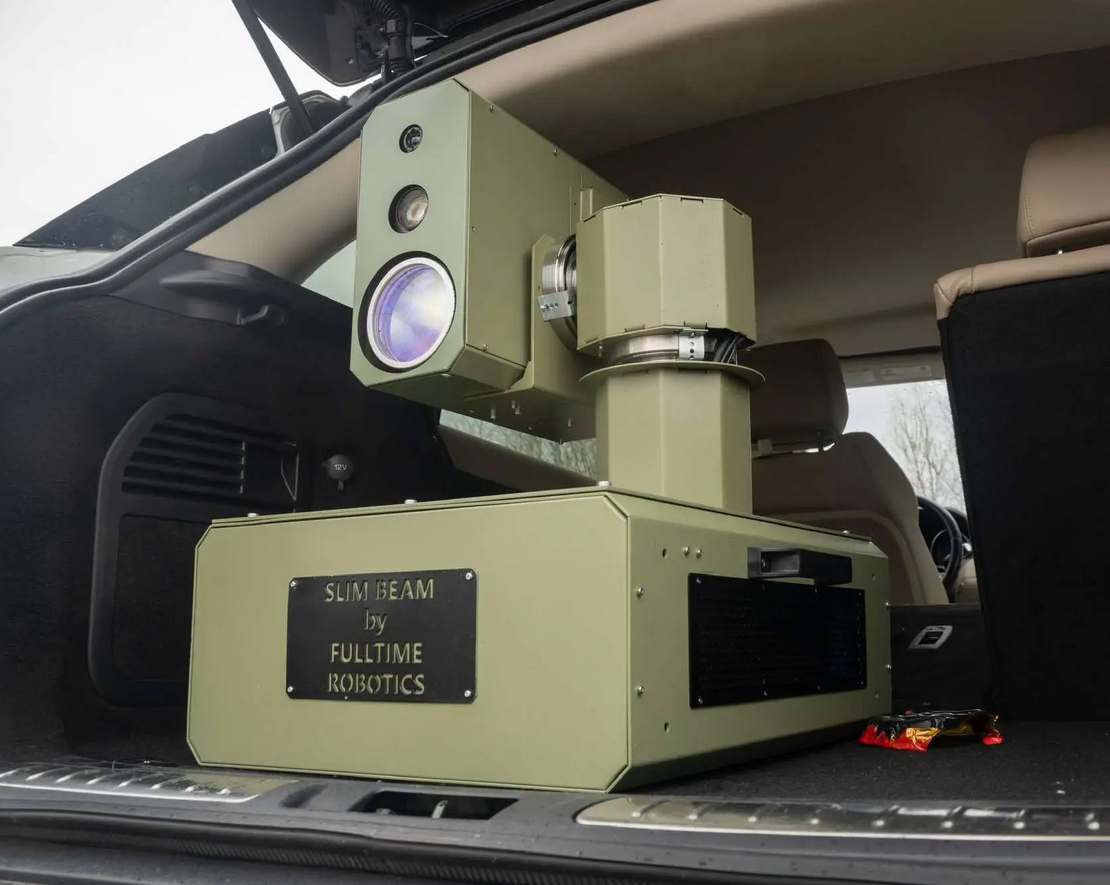
Kyiv, August 2, 2025 — Ukrainian defense technology firm Fulltime Robotics has introduced its latest development, the SlimBeam laser-based anti-drone turret. The prototype, revealed during the IRON DEMO 2025 event, is designed to counter small unmanned aerial vehicles (UAVs) and support a range of other tactical and technical tasks.
Technology and Product Specifications
SlimBeam uses a 1.5 kW laser to disable reconnaissance-class FPV drones at distances of up to 1 kilometer. In optical disruption mode, where the system targets and blinds drone sensors, its range extends to 2 kilometers.
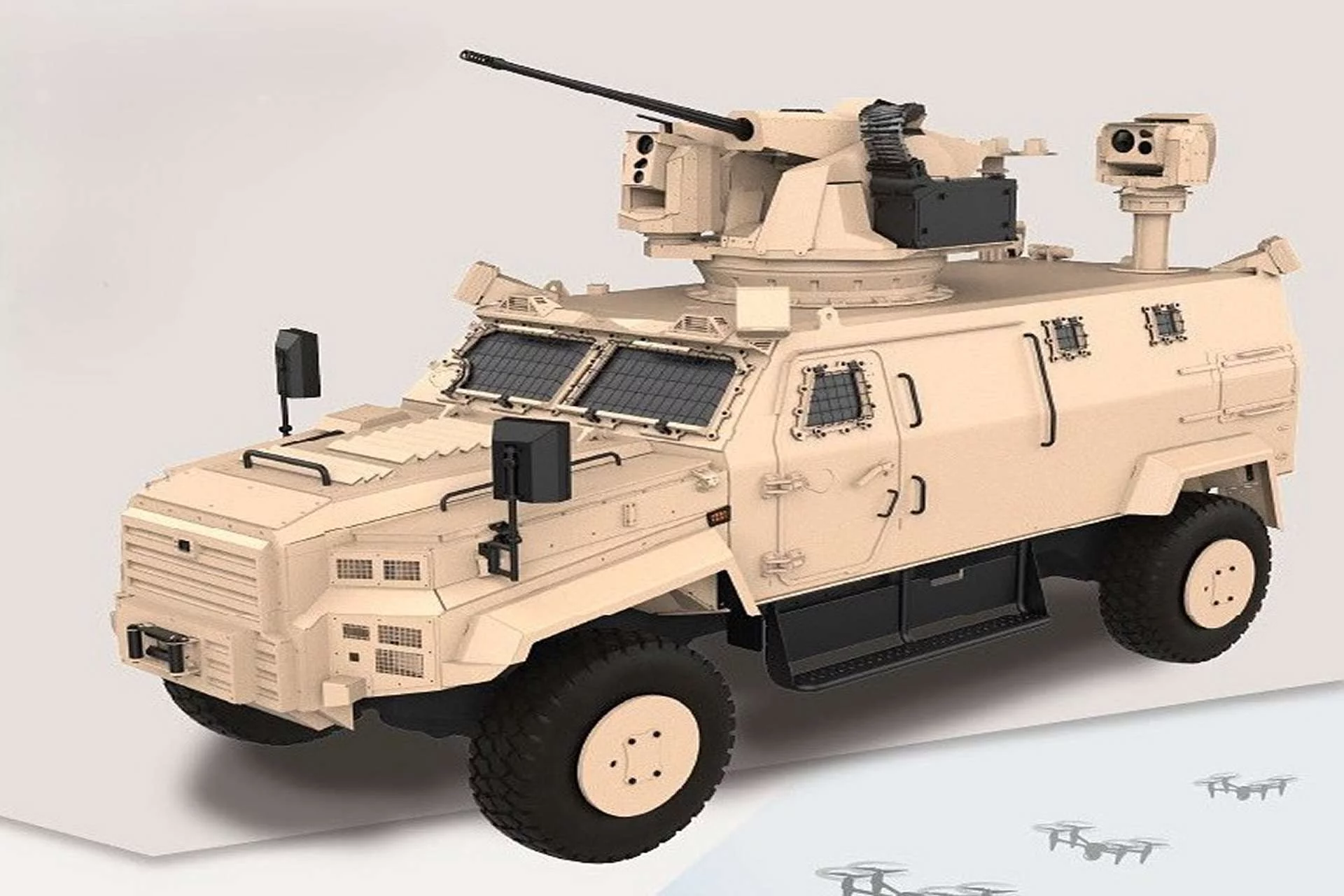
Compact in design, the unit measures 55 × 52 × 67 cm and weighs around 50 kilograms. This small footprint enables easy transport and integration into stationary mounts, vehicles, or unmanned ground platforms. SlimBeam can operate both autonomously and under remote control, with targeting managed through a web-based interface.
The system’s beam is silent and invisible, making it difficult for adversaries to detect its operation. It can also be used for engineering and support roles, such as burning through locks, clearing ice, removing debris, and assisting in mine clearance.
At present, the system requires manual tracking, and neutralizing a small UAV typically demands a continuous beam on the target for 5 to 15 seconds. Against larger loitering munitions, such as Shahed-series drones, this engagement time can extend to 10–12 seconds. Fulltime Robotics has confirmed that work is underway on an automated tracking module to improve targeting efficiency.
Company Profile and Other Products
Founded in 2018, Fulltime Robotics specializes in robotics, remote-control systems, and directed-energy devices. The SlimBeam prototype is part of a broader product portfolio that reflects the company’s focus on modular, compact defense tools.
Other products include:
LR-1000 Laser Rifle — a portable anti-drone laser designed for infantry use, capable of both disabling drones and disrupting optical systems.
SB Bot — an unmanned ground vehicle integrating the SlimBeam turret for mobile, automated deployment.
Auto-focusing Laser Collimators — precision tools for industrial and defense applications.
The company’s approach emphasizes adaptable systems that can serve both military and civilian purposes, from counter-UAV operations to infrastructure maintenance.
Context
SlimBeam is entering a market where counter-unmanned aerial vehicle (cUAV) technologies are becoming a high priority for armed forces. Ukraine has faced sustained drone activity in recent years, prompting both domestic and international investment in directed-energy weapons as a cost-effective alternative to missile interceptors.
The system complements other Ukrainian developments, such as the Tryzub mobile laser platform, and mirrors global trends. International defense manufacturers, including Australia’s Electro Optic Systems, are fielding high-power mobile laser systems capable of defeating drone swarms at ranges beyond 2 kilometers. These solutions aim to address the growing challenge of mass-produced UAVs used in both surveillance and strike roles.
For Ukraine, the advantage of systems like SlimBeam lies in their low operational cost per engagement and their potential to integrate into layered air defense networks. While missile-based solutions remain essential for high-value and long-range threats, lasers can provide a persistent, ammunition-free method for handling short-range, low-cost drones that might otherwise saturate defenses.
Outlook
Fulltime Robotics plans to continue testing SlimBeam in operational environments and to refine its autonomous targeting capabilities. Scaling up production and integrating higher-power variants are also under consideration.
With the rise of drone warfare and the urgent demand for flexible, cost-efficient countermeasures, systems like SlimBeam are likely to play a growing role in both military operations and critical infrastructure protection.