







ARLINGTON, Va./KYIV, July 28 — Defense software maker Auterion will supply 33,000 artificial intelligence-driven “strike kits” for drones to Ukraine under a $50 million contract with the U.S. Department of Defense, the company said on Monday.
The delivery, the largest of its kind from the firm, expands Auterion’s previous shipments to Ukraine more than tenfold. The kits are designed to convert commercially available drones into semi-autonomous strike platforms capable of targeting in contested airspace.
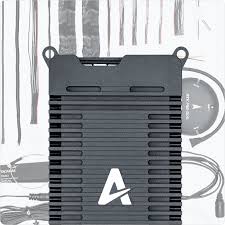
Each kit is built around Auterion’s Skynode system, which integrates an AI computer, camera and communications module. The system enables drones to lock on to targets at distances of up to one kilometer, operate in the face of signal jamming and continue missions without constant operator control.
“This is not only significant for Ukraine’s defense but also represents an advancement in drone warfare technology,” Chief Executive Lorenz Meier said in a statement.
Software-defined autonomy
Founded as an open-source drone software developer best known for the PX4 autopilot, Auterion has shifted its focus toward defense. Its Skynode kits run on the company’s AuterionOS, a modular platform providing AI-based targeting, secure communications and compatibility with multiple airframes.
By automating navigation and strike functions, the kits allow inexpensive drones to perform roles traditionally filled by larger, costlier military UAVs. The approach leverages commercial supply chains to enable rapid scaling and lower per-unit costs.
Timing and battlefield needs
Ukrainian air defenses have come under mounting pressure, with interception rates for Russian missiles and drones falling from over 90% last year to roughly one-third in recent months, according to Ukrainian officials. The new kits are intended to help Ukrainian forces counter this by boosting both offensive and defensive drone operations.
While the shipment falls short of Ukraine’s stated goal of acquiring millions of drones, analysts say the volume represents the largest Western supply of autonomous drone guidance systems to date and will have a visible impact in the field.
Broader strategy
The Pentagon contract aligns with NATO efforts to standardize drone control and data systems across allied forces. Auterion is working with German defense group Rheinmetall to develop interoperability standards for unmanned systems, allowing different manufacturers’ drones to share targeting data and operate in coordinated missions.
The company has also expanded into Asia. In June, it signed an agreement with Taiwan’s National Chung-Shan Institute of Science and Technology to integrate its autonomy software into drones intended to deter potential Chinese military action. That deal could eventually involve millions of units.
Shifts in drone warfare
Auterion’s systems have been battle-tested in Ukraine, where small, fast-moving drones have become a central element of both attack and reconnaissance. The Skynode’s ability to maintain targeting during electronic warfare disruptions addresses a key weakness in manually piloted first-person-view drones, which can lose control under jamming.
Defense analysts say the volume of kits being delivered to Ukraine could support swarm-style tactics or significantly increase the proportion of drones with precision-strike capability. Such tactics could help offset manpower constraints and extend the reach of artillery and missile units.
Looking ahead
The shipment underscores the growing role of mid-sized technology firms in supplying front-line military capabilities once dominated by large defense contractors. By focusing on adaptable software and modular hardware, companies like Auterion can deliver upgrades that scale across multiple conflict zones.
For Ukraine, the kits will arrive at a time when demand for autonomous, resilient systems is high and traditional air defense resources are strained. For Auterion, the Pentagon deal cements its position as a player in the expanding market for AI-enabled combat drones — a role the company is looking to extend through partnerships in Europe and Asia.