







Introduction
The Russia-Ukraine conflict has dramatically reshaped the global defense industry, placing an unprecedented focus on unmanned aerial vehicles (UAVs), particularly first-person view (FPV) drones. These compact, agile, and cost-effective systems have demonstrated their value in reconnaissance, targeted strikes, and electronic warfare. Recognizing this shift, Donaustahl GmbH, a Bavarian defense startup, has launched six-figure production volumes of its MAUS FPV drone. These drones are destined for deployment with Ukraine’s Kraken special reconnaissance unit, one of the country’s elite formations.
Key Takeaways
Donaustahl’s move into high-volume drone manufacturing underscores the growing importance of industrial scalability in modern warfare. The company’s MAUS drone project not only boosts Ukraine’s operational effectiveness but also sets a new benchmark for NATO-aligned drone producers. With its focus on modularity, affordability, and integration of emerging technologies like AI, Donaustahl is establishing itself as a critical supplier within Europe’s evolving defense ecosystem.
Company Profile
Headquartered in Hutthurm, Germany, Donaustahl GmbH is a young but increasingly influential name in the defense technology sector. The company was founded with the intention of addressing critical gaps in Europe’s drone capabilities—most notably, the need for rapid, affordable, and field-adaptable unmanned systems. Donaustahl’s leadership is composed of defense industry veterans and engineers with backgrounds in modular robotics, additive manufacturing, and software integration. Their flagship product, the MAUS FPV drone, exemplifies the firm’s core principles of simplicity, adaptability, and mass-producibility. As one of the few German companies producing FPV drones at scale, Donaustahl plays a pioneering role in aligning Western drone output with the battlefield realities experienced by Ukrainian forces.
Technology
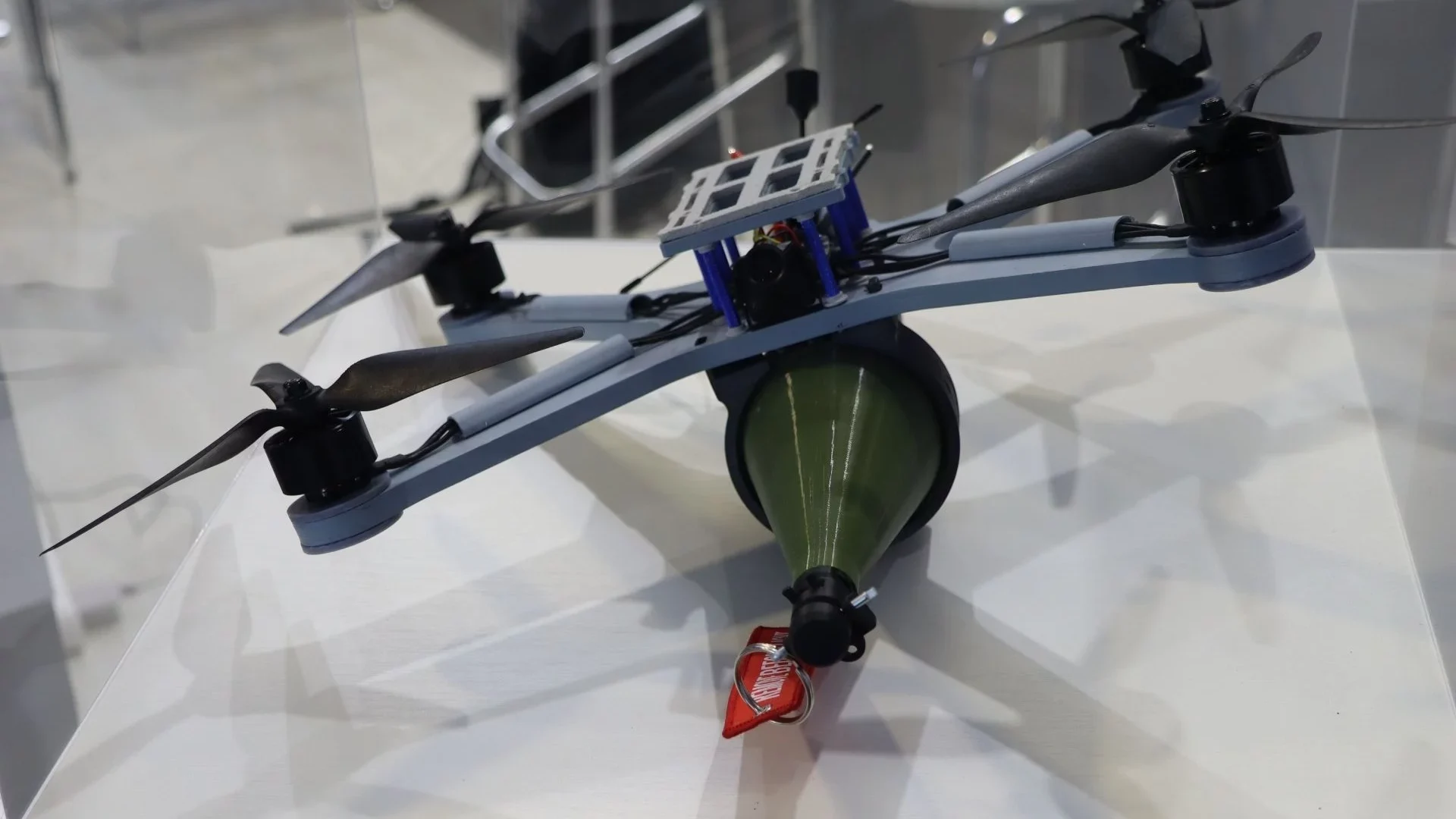
The MAUS FPV drone stands out not merely because of its battlefield utility but also due to its innovative design and manufacturing philosophy. The drone is a quadcopter platform optimized for both reconnaissance and strike missions. Its modular design allows rapid reconfiguration depending on the operational needs. For example, operators can switch between payload modules for explosive delivery or real-time surveillance equipment, including infrared and thermal imaging systems. This modularity is vital in a conflict environment where mission demands can change on short notice.
A key feature of the MAUS is its payload capacity of up to 2.7 kilograms, enabling it to carry various forms of ordnance, such as RPG-based munitions, effectively converting it into a loitering munition. Despite this robust load-bearing capability, the drone maintains a practical flight range of 5 to 7 kilometers, making it well-suited for frontline engagements as well as rear-area targeting. One of the more unconventional aspects of the MAUS drone is its construction material—specially treated wood. This approach reduces the drone’s structural weight efficiency by around 10% compared to composite-frame counterparts, but it lowers manufacturing costs by approximately 75%. This trade-off significantly enhances the economic feasibility of producing drones in large numbers, a vital consideration in prolonged conflict scenarios.
Further distinguishing the MAUS is Donaustahl’s integration of artificial intelligence through a system under development called “Vulture.” This software aims to autonomously identify enemy personnel and vehicles using pattern recognition, thereby aiding targeting decisions in real time. While still in the testing phase, Vulture reflects the broader trend of combining AI with unmanned systems to improve autonomy and battlefield awareness.
Competition
The landscape of FPV drone manufacturing, particularly in support of Ukraine, is becoming increasingly crowded and competitive. Numerous Ukrainian companies, often funded through a combination of private capital and public fundraising campaigns, have entered the sector. Notably, TAF Drones and 3DTech are among the most prolific domestic producers. In 2024 alone, TAF Drones manufactured approximately 350,000 FPV units and plans to increase that figure significantly in 2025. Their success is grounded in Ukraine’s direct access to battlefield feedback and the ability to iterate designs rapidly based on combat experience.
In addition to domestic efforts, non-profit organizations such as Escadrone and Wild Hornets contribute meaningfully to Ukraine’s drone capacity. These groups rely on donations and volunteer engineering expertise to produce low-cost drones, which they ship to front-line units. While their models are generally simpler and less technologically sophisticated than industrially produced systems, their high production volumes and low unit costs make them a crucial part of Ukraine’s drone arsenal.
On the international front, companies like Aerobavovna are exploring unconventional innovations. For instance, they have experimented with helium balloons to extend the communication range of FPV drones, thereby overcoming one of the major limitations of short-range quadcopters. These inventive adaptations show how diverse and dynamic the drone ecosystem supporting Ukraine has become.
Donaustahl differentiates itself from these players by combining the tactical innovations of Ukrainian drones with German industrial precision. The company’s ability to produce at scale, along with its emphasis on modularity and cost efficiency, gives it a significant advantage over volunteer-led efforts and even many institutional manufacturers. While Ukrainian firms benefit from real-time battlefield insight, Donaustahl’s edge lies in its quality control, scalable logistics, and advanced R&D capabilities, such as its AI integration initiatives.