








Introduction
Trypillian, a British-Ukrainian defense technology startup, closed a $5 million seed funding round in late May. The sole investor is Brooks Newmark, a former UK minister and humanitarian advocate for Ukraine. Newmark also assumed the role of chairman in the company. Trypillian, founded in 2024 by a coalition of Ukrainian and UK military veterans and experts, operates from both London and Kyiv. Its leadership team includes CEO Ivan Matveichenko, who served in frontline engagements for Bakhmut and Soledar. The funds are intended to support R&D and initial prototype development of autonomous deep-strike combat systems, battlefield communication infrastructure, and other frontline-oriented solutions.
Company Profile
Trypillian was formed with the explicit goal of creating battlefield-ready, autonomous military technologies born of direct combat experience. The founding team brings firsthand insight into operational challenges faced on front lines. With a base in both London and Kyiv, the startup maintains a core team composed largely of veterans, working within a lean structure of approximately 15 personnel. The company positions itself as an organizing entity—a hybrid between a strategic project office and a technology incubator—managing portfolios of defense tech projects developed both in-house and through partner entities. It provides project coordination, capital structuring, legal oversight, and initial R&D, while scaling and manufacturing responsibilities are delegated to partner teams.
Technology
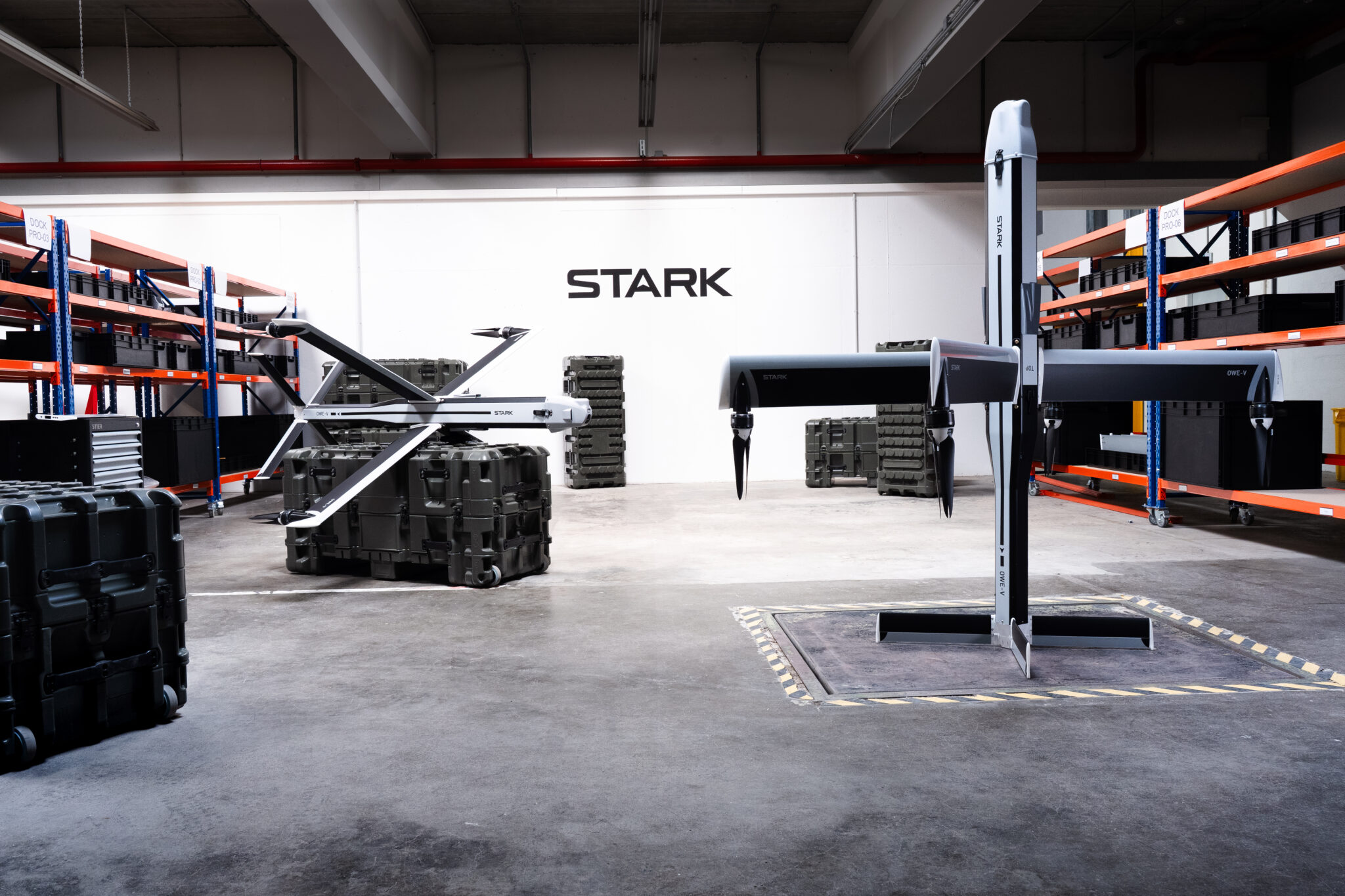
At the center of Trypillian’s early portfolio is its deep-strike drone system—a kamikaze-style, fixed-wing unmanned aerial vehicle designed to strike targets deep behind enemy lines. It is built to create asymmetric engagement dynamics, forcing adversaries to expend high-value air-defense resources in response to low-cost drones. The architecture is modular, with high- and low-cost variants tailored to different customer segments. The design emphasizes high altitude flight and fast cruise speeds, beyond easily accessible targeting ranges. Trypillian plans its first test flights in the near term, with operational deployment expected soon thereafter.
In parallel, Trypillian is developing secure battlefield communication platforms engineered for electronic warfare environments. These systems complement the deep-strike capabilities and are designed to integrate seamlessly into existing tactical architectures. The company engages closely with partner organizations—a consortium of Ukrainian and international firms—to supply critical components and conduct development. Trypillian maintains a streamlined structure, focusing on prototypes and early demonstration, while manufacturing and scale-up occur through collaborators.
The company’s strategy emphasizes solutions that require minimal operator training, rapid deployment, and compatibility with the evolving and mixed armaments used by the Ukrainian military. It prioritizes platforms that can be fielded quickly and operate effectively in unpredictable combat conditions, complementing existing command structures and procedural norms.
Company Outlook
With the infusion of seed capital, Trypillian is setto transition from concept to prototype testing. The funding enables the company to complete deep-strike drone design, conduct flight trials, and validate its communications platform under combat-like conditions. As chairman, Newmark’s involvement strengthens governance and may facilitate access to Western defense networks and institutional support. Over the near term, Trypillian will refine its R&D capabilities and prepare for initial deployment. Success in early field tests and operational validation will be key in attracting further funding and scaling its solutions into broader defense markets. However, its technology is still conceptual and not proven, making the seed round a high risk investment.
Competitors
Trypillian enters a competitive defense technology landscape that includes both specialized startups and established industry players. Within Ukraine, firms such as Himera (electronic warfare communication systems), Bavovna.ai (autonomous navigation), and Swarmer (AI-driven drone coordination) are developing adjacent technologies. At a regional and international level, companies such as Northrop Grumman, Kratos, and Lockheed Martin are investing heavily in deep-strike and autonomous systems, offering well-funded alternatives with broader infrastructure. Other smaller innovators, including Ukrainian-focused startups and EU-based drone manufacturers, compete in specific niches such as FPV systems or unmanned ground systems. Trypillian’s strength lies in its veteran-led, battlefield-vetted approach and integrated project model. Its ability to compete effectively will depend on delivering reliable prototypes, demonstrating cost-per-engagement advantages, and securing early adopter deployments with Ukraine’s armed forces or allied partners.