










Introduction
SpinLaunch, the California-based aerospace startup developing centrifugal launch technology, secured $30 million in a recent financing round. The round was led by ATW Partners and includes a $12 million strategic investment from Kongsberg Defence & Aerospace. The funding is intended to support the development of Meridian Space, the company’s planned low-Earth orbit broadband satellite constellation, as well as scaling its orbital launch system and production infrastructure.
Key Insights
The funding milestone underscores confidence in SpinLaunch’s dual strategy: its kinetic launch system and its emerging broadband constellation. The Meridian Space initiative aims to deploy hundreds of compact satellites to deliver low-latency connectivity, while the company’s low-cost, high-frequency launch approach targets a structurally different segment of the space market.
Company Profile
Founded in 2014 in California, SpinLaunch has progressed from conceptualizing its kinetic launch mechanism to testing suborbital accelerators. The company has raised over $150 million in prior rounds, backed by investors like Founders Fund and Airbus Ventures. A leadership change in 2025 placed Massimiliano Ladovaz, former OneWeb CTO, at the helm to steer the Meridian Space commercial push. Though still privately held, SpinLaunch employs over 120 staff and operates test facilities in Long Beach and New Mexico, alongside future site plans in Alaska.
Technology
SpinLaunch’s launch technology uses a ground-based centrifuge—a vacuum-sealed circular accelerator—that spins payloads to hypersonic velocities (around 8,000 km/h) before release, replacing up to 75% of traditional fuel-based energy with mechanical energy. The move significantly curbs cost per kilogram (estimated between $1,250–$2,500), reduces emissions, and promises rapid launch cadence—potentially 5–10 launches daily once operational.
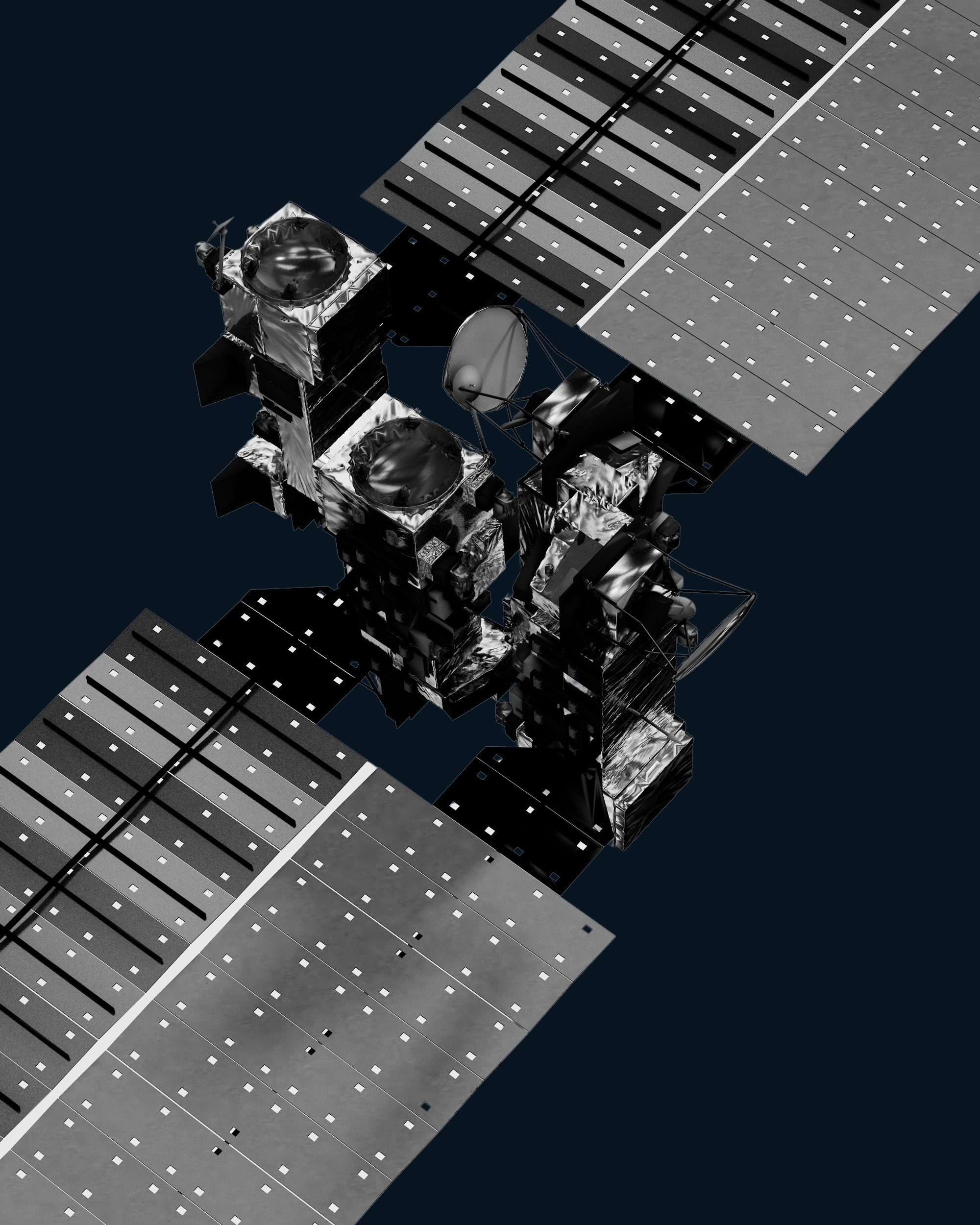
Meridian Space is the company’s complementary satellite initiative: a broadband constellation composed of lightweight microsatellites (~70 kg), manufactured by Kongsberg NanoAvionics under a €122.5 million contract. The initial deployment includes two prototypes, including an in-orbit demonstrator planned for 2026, and proceeds to serial production of 280 satellites, with scalability to at least 1,200 in future phases. The constellation uses fixed-track orbits and reflectarray antennas to simplify ground terminals, enabling terabits-per-second capacity in a single launch.
SpinLaunch has also developed a multi-band reflectarray antenna on the ground, optimizing bandwidth and energy efficiency by combining aspects of reflector and phased array designs. This supports their high-throughput, low-capital model for satellite communications.
Company Outlook
With fresh funding in place, SpinLaunch can accelerate construction of its orbital accelerator facility, particularly on Adak Island, Alaska. It can also move forward with satellite production via Kongsberg and drive toward the first customer link projected in late 2026. Success will depend on achieving technical readiness, regulatory approvals, and early commercial or government partnerships.
Competitors
SpinLaunch operates in a competitive environment that includes rocket launch providers like SpaceX and Rocket Lab, as well as satellite broadband operators such as OneWeb and Starlink. Its nearest analog in infrastructure innovation may be emerging high-frequency launch concepts. While incumbents offer end-to-end services, SpinLaunch combines launch and constellation deployment under an integrated model. On the satellite manufacturing side, competitors like Airbus and Boeing orbit constellations using traditional deployment methods, but SpinLaunch’s approach potentially outpaces them in cost and speed. The company’s partnerships and technology could allow it to capture market interest from enterprise and defense customers seeking scalable, resilient satellite infrastructure.